

Hopper Dryer vs Dehumidifying Dryer: Which Does Your Plastic Material Need?
A straightforward comparison of two common ways to prepare plastic granules for processing.
Correct material drying is essential for consistent injection moulding and extrusion. Moisture can cause surface marks, brittleness, poor mechanical properties and unstable processing. However, not every polymer needs the same drying method.
What Is a Hopper Dryer?
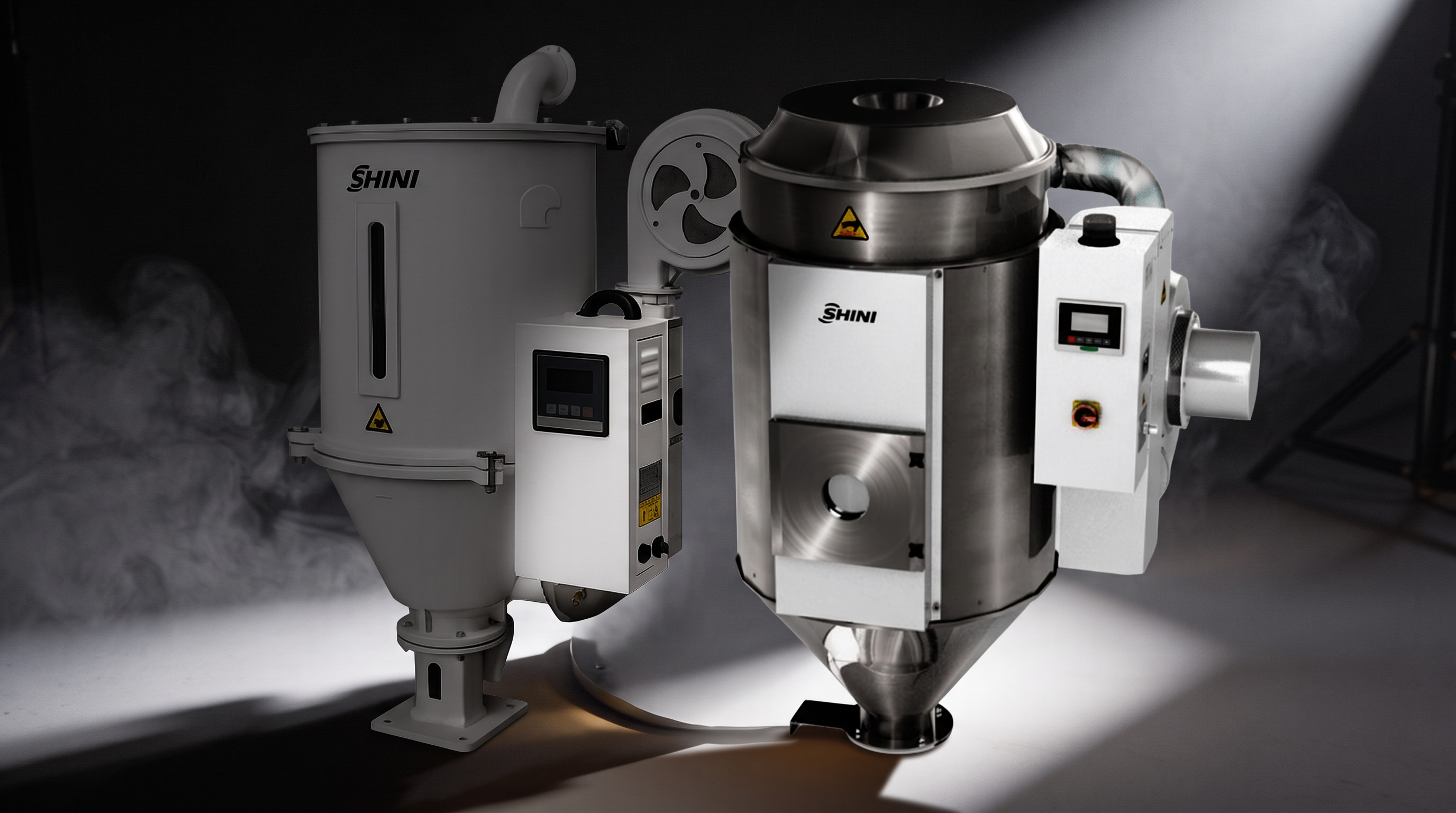
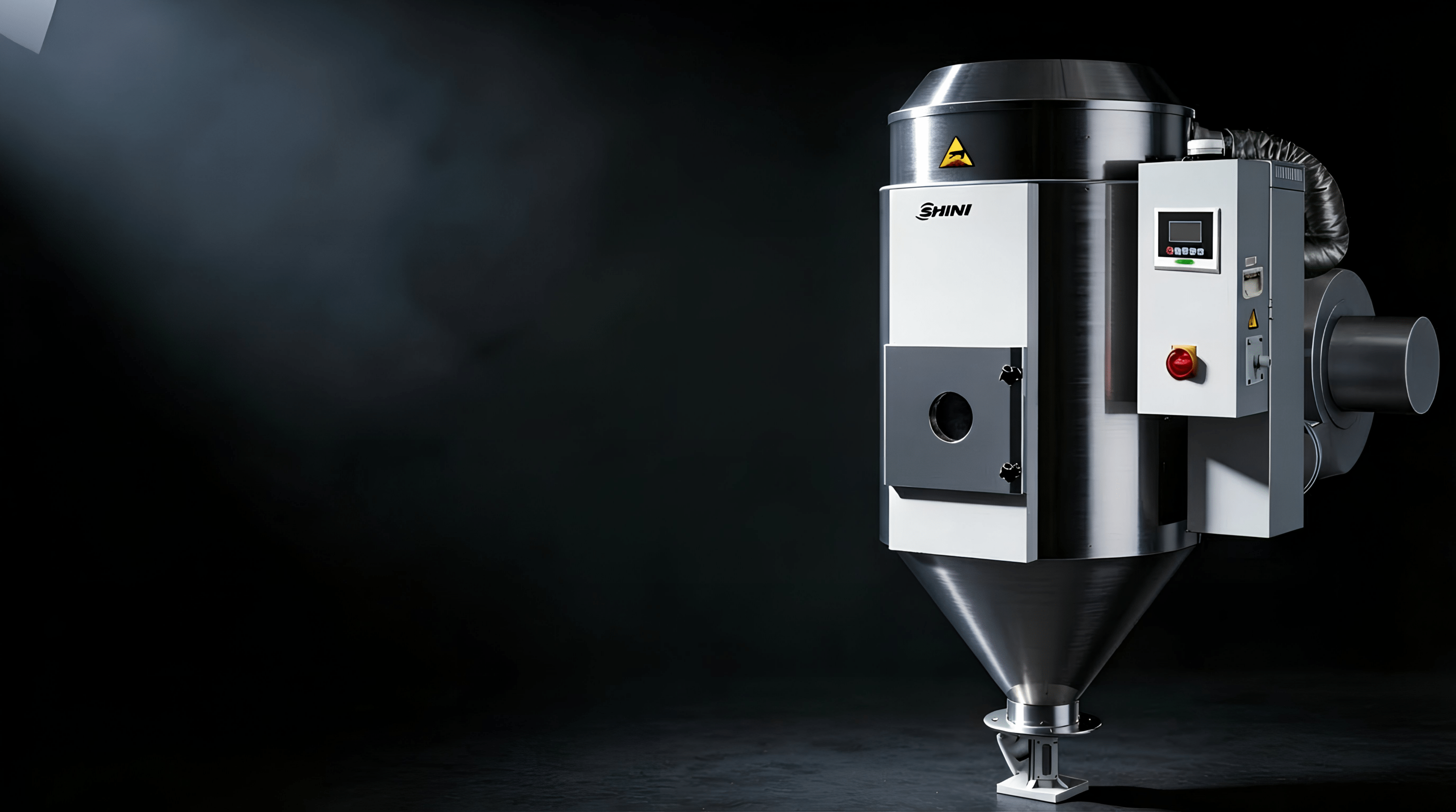
A hopper dryer heats ambient air and passes it through plastic granules held in an insulated or non-insulated hopper. The warm airflow removes surface moisture and keeps material at a controlled processing temperature.
Hopper dryers are relatively simple and cost-effective. They are widely used for non-hygroscopic materials and for applications where removing surface moisture is the main requirement.
What Is a Dehumidifying Dryer?
A dehumidifying dryer supplies very dry air to the material hopper. The system removes moisture from the process air, heats it and circulates it through the granules. Because the air has a low dew point, it can draw absorbed moisture from hygroscopic polymers.
This controlled process is important for materials that absorb water into their molecular structure. Simply warming these materials with ordinary factory air may not dry them sufficiently.
The Main Difference
A hopper dryer mainly uses heated ambient air. A dehumidifying dryer controls both temperature and the moisture content of the drying air. The choice therefore depends more on the polymer and required dryness than on machine preference.
A hopper dryer may be suitable when:
- The material is non-hygroscopic or only has surface moisture.
- Factory humidity is reasonably stable.
- The process does not require a tightly controlled dew point.
- A simple, economical drying arrangement is appropriate.
A dehumidifying dryer may be required when:
- The polymer is hygroscopic, such as many grades of PET, nylon, polycarbonate or ABS.
- Moisture-related defects or loss of mechanical performance are a risk.
- The process needs repeatable drying throughout changing weather and factory conditions.
- Material suppliers specify a low final moisture content.
What Information Is Needed Before Selecting a Dryer?
Start with the material supplier’s drying guidance. Important figures include drying temperature, drying time, maximum moisture content and any warning about overheating. Then calculate material consumption in kilograms per hour and the hopper capacity needed to provide the required residence time.
Also consider whether the material will be conveyed after drying, whether more than one machine needs dry material, and how frequently colours or polymers change. Insulation, return-air filtration, automatic controls and easy-clean construction can all affect running cost and usability.
Avoiding a Common Drying Mistake
A dryer cannot compensate for poor material storage or an undersized hopper. Open bags, leaking lids and long conveying routes exposed to ambient air can allow dried material to regain moisture. The complete route from storage to the machine throat should be considered.
Choosing the Right Shini Drying System
Shini UK offers standard and insulated hopper dryers, dehumidifying dryers, mini dehumidifying dryers, honeycomb dehumidifiers, compressed-air dryers and modular systems. The best choice depends on material behaviour, throughput and the level of process control required. The Shini UK team can help calculate the correct equipment and hopper size for your application.