

How to Choose the Right Granulator for Plastic Sprues, Runners and Reject Parts
The practical factors that determine granulator size, cutting method and installation.
Granulators are not one-size-fits-all machines. A unit that handles small polypropylene sprues beside a moulding machine may struggle with thick engineering-plastic rejects. Choosing well starts with the waste stream rather than the motor rating alone.
1. Define the Material
Record every polymer that will enter the granulator, including filled or reinforced grades. Hard, brittle, flexible, glass-filled and heat-sensitive materials behave differently during cutting. Mixing incompatible polymers can make the resulting regrind unusable, so segregation may affect how many machines are required.
2. Measure the Largest Part
The feed opening must safely accept the largest sprue, runner or rejected component. Long parts may bridge in the hopper even if their weight is low. Thick sections and solid lumps need more cutting torque than thin-walled mouldings.
3. Calculate Peak Throughput
Average waste generation can hide short peaks. A robot may drop a sprue every cycle, while a batch of rejects may be loaded into a central granulator at once. Calculate kilograms per hour and consider the timing and method of feeding. Allow sensible capacity without selecting a machine so large that cleaning and energy use become disproportionate.
4. Decide Where Granulation Will Take Place
Beside the machine
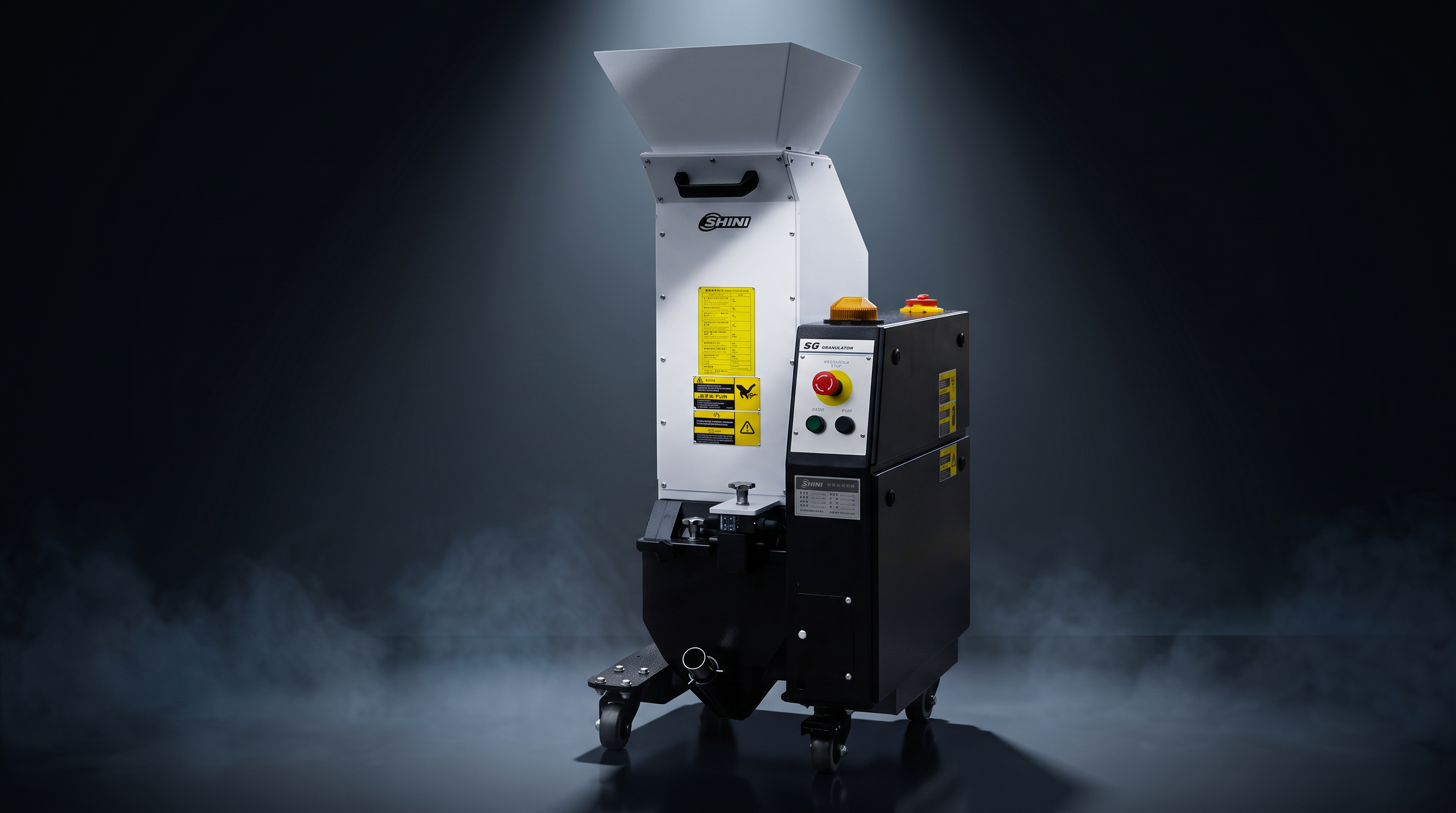
Low-speed and screenless granulators can process clean waste at source. This supports segregation and can integrate with a sprue picker, robot or conveyor.
In a central area
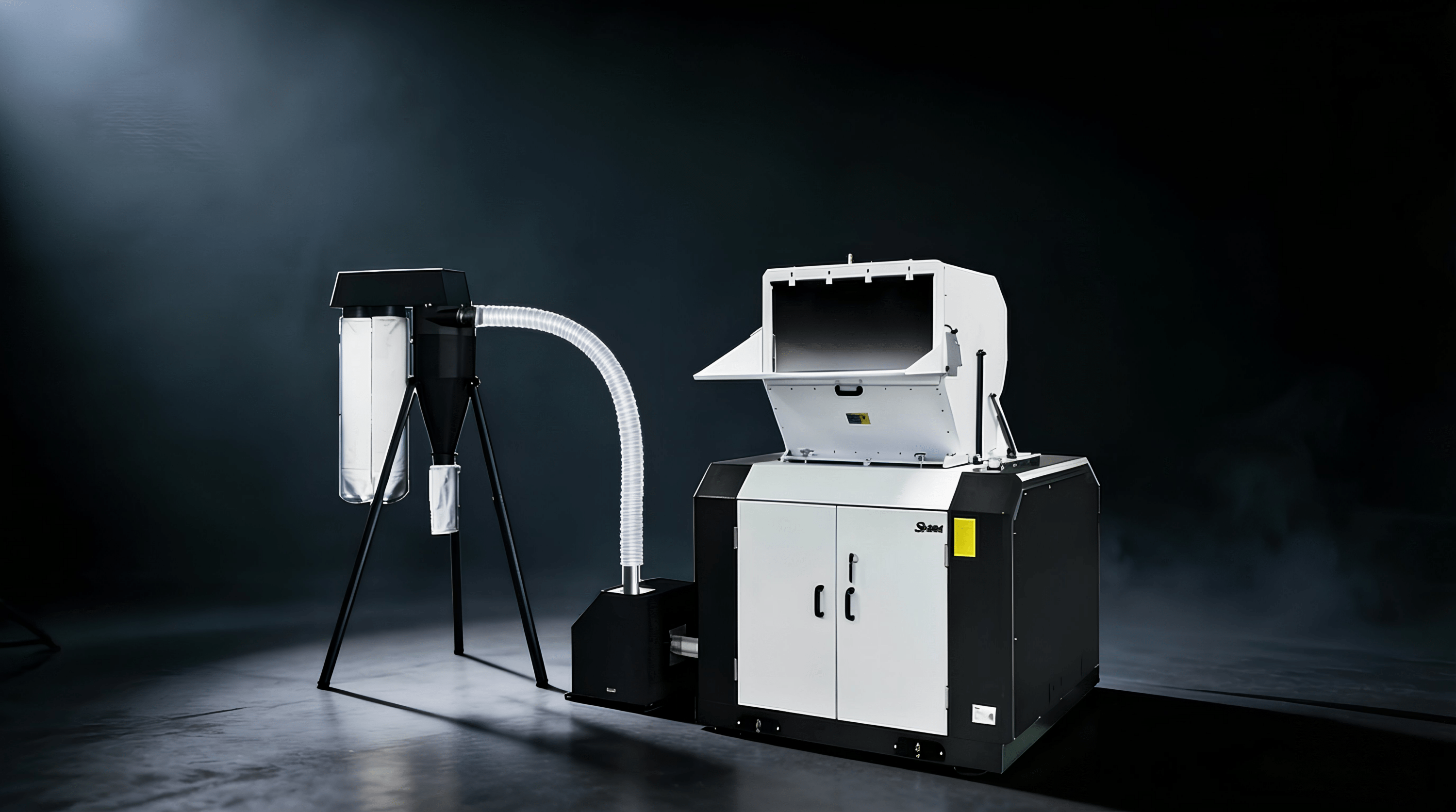
A central granulator consolidates waste from several machines and can handle larger batches. It needs a controlled method for identifying, moving and feeding material to avoid contamination.
5. Select the Cutting Arrangement
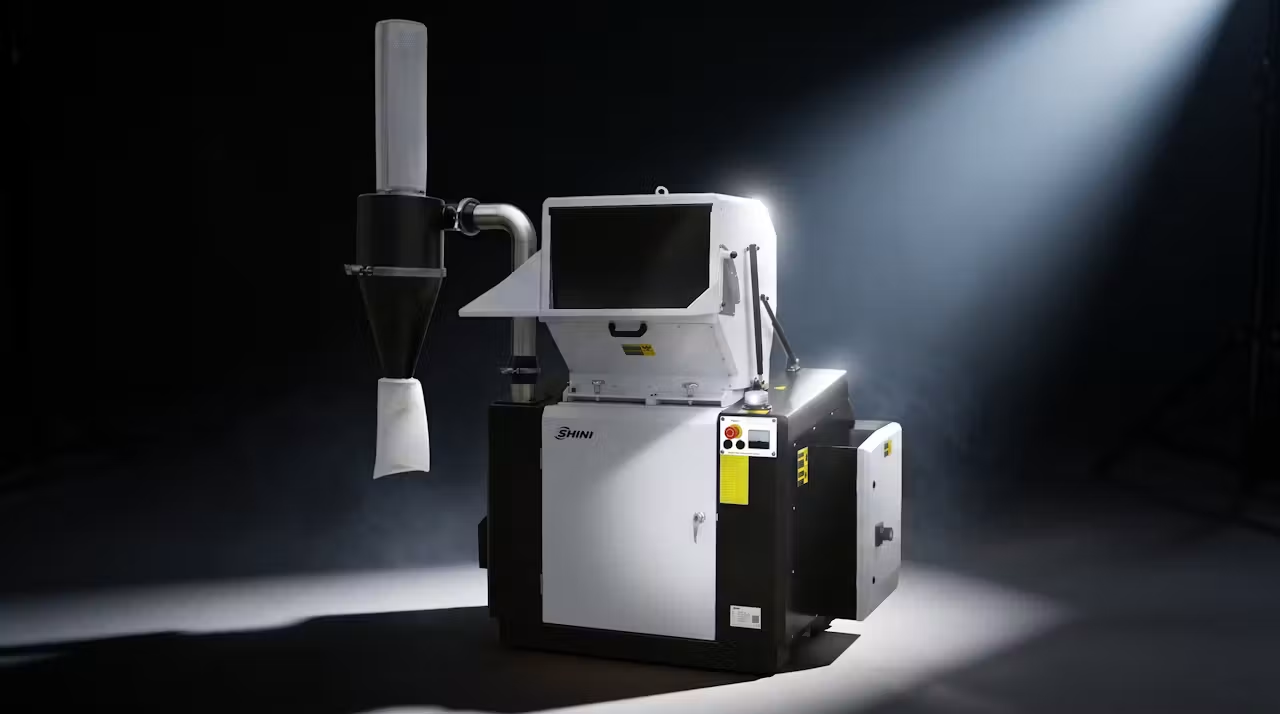
Low-speed cutters generally produce less noise and dust and are well suited to sprues and controlled beside-the-machine use. Screenless designs avoid conventional screen blockage and can produce consistent regrind from suitable hard materials. Higher-speed central granulators provide greater throughput and versatility for larger parts.
6. Consider Regrind Quality
The intended use of the output matters. If regrind will return directly to production, particle consistency, dust and contamination require close control. Screen size, blade condition, rotor speed and conveying after granulation all influence quality.
7. Plan Feeding and Collection
- Manual feeding is flexible but creates operator handling.
- Robot or conveyor feeding supports automatic, repeatable operation.
- A metal separator can protect the cutting chamber from tramp metal.
- A collection bin is simple; vacuum take-off can create a closed-loop recycling cell.
- Dust separation may be needed before regrind returns to the process.
8. Check Cleaning, Noise and Safety
Frequent colour or material changes make access and clean-down time commercially important. Review blade access, screen removal, chamber opening, sound level, guarding, interlocks and dust control. Operators should be trained, and isolation procedures must be followed before clearing or servicing the machine.
Match the Machine to the Waste
A useful selection discussion includes sample parts, photographs, polymer details, hourly waste figures and a simple factory layout. Shini UK supplies screenless, low-speed, central, large and specialist granulators. The team can assess the waste stream and recommend an arrangement that balances throughput, regrind quality and operating cost.